
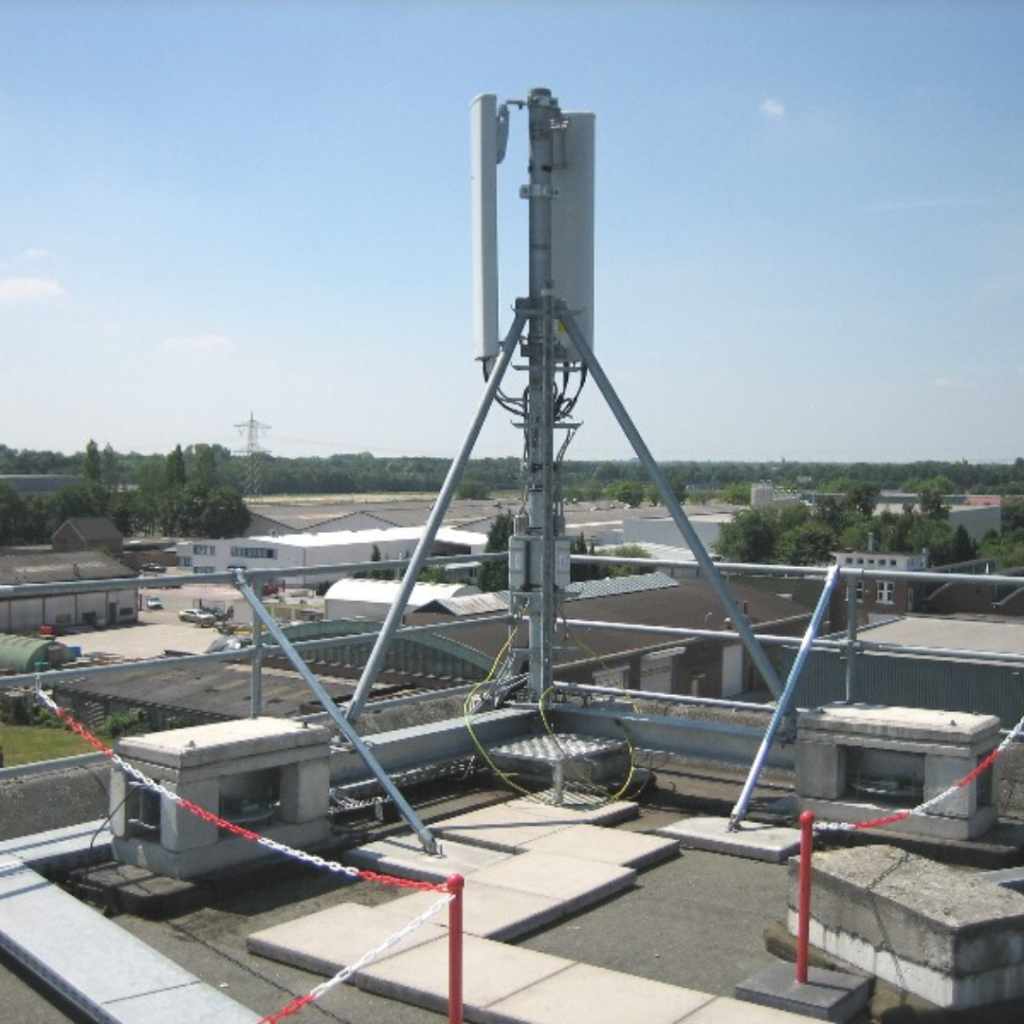
Guyed towers consist of a body or mast with a triangular, square, or solid circular cross-section that is mounted on a foundation with pin joints.
The components of these towers are made of rod elements with different cross-sections such as can, tube and angle sections, and to ensure the stability of the mast, it is restrained from around by steel cables connected to concrete foundations. For example, the braces are installed along the height of the tower at an angle of 45 degrees to its longitudinal axis in an guyed tower, and each brace has a separate foundation. In another case, a group of braces placed in the same plane are connected to a common foundation. Usually, in this case, the maximum deviation angle of the highest harness is 60 degrees to the horizon.
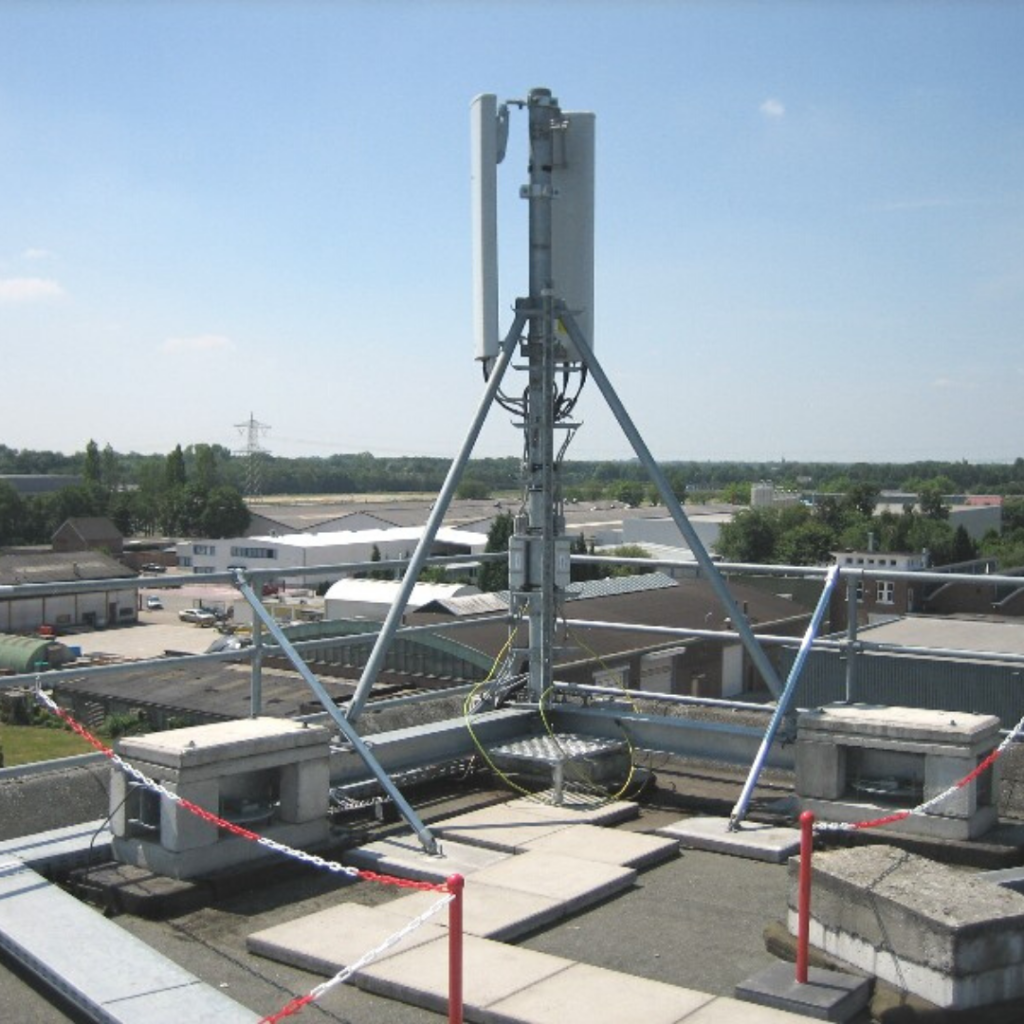
The main bases of the tower are made of corners and are guyed to the foundation by guy cables and must be installed on the roofs on the pillars of the building and they can be installed on the ground as well, which is called a guyed mast.
These types of towers have the advantage of being installed on most buildings due to their low weight and the application of gravity forces by the tower and tensile forces by guys. These towers can be installed on the roof of houses and houses, etc., in addition to the fact that the height of the building contributes to the height of the antenna installation and has many advantages in urban areas.
Those towers are produced in the form of tripod with a 60-degree angle profile, and four legs with a standard angle profile. Its sections are 3 meters or 6 meters and can be used up to the required height.

The main legs of the mast:

The main bases of the tower are made individually from a 60-degree angle or a 90-degree angle and are restrained by a tubular handle or an angle to the foundation and must be installed behind the roofs and on the building’s pillars, which is called a brace pole.
These towers are mainly produced in the form of tripods and quadrupeds with angle profiles and handles made of tubular or corner profiles. Its sections are 3 meters or 6 meters, and it can be used up to a height of 9 meters and in special cases that are designed separately for the relevant origin, up to a height of 12 meters.
These types of towers have advantages due to their low weight and are used in places where there is not enough space.
These towers have the ability to be installed on the roofs of houses and offices, in addition to the fact that the height of the building helps the height of the antenna installation, and it has many advantages in urban areas.
Each rooftop brace tower must include the following equipment and accessories.

Rooftop two-guyed masts (which are now called Rooftop Poles) are types of masts that are implemented and installed penetratingly on the roof structure and at the corner of the building.
These masts can be in two forms of Solid/Fix Guyed Masts, and are installed in two positions with an angle of 90 degrees to the mast axis.
The technical specifications of the tubular rooftop pole used in the telecommunications network are:

9217060309
Krishna Industries, since 2010 has grown to INR 50Mn enterprise through its long-term involvement as the infrastructure creators for several known conglomerates in telecom and Service Integrators.